knowledges
Are There Environmental Benefits to Using Titanium Anodes for Copper Electrowinning?
2024-07-25 11:59:15






Copper electrowinning is a widely used industrial process with metal smelting applications. However, traditional copper electrowinning methods often raise environmental concerns due to their energy consumption and potential for toxic waste generation. In recent years, there has been growing interest in using titanium anodes as an alternative in copper electrowinning processes. This blog post will explore the potential environmental benefits of this approach, with a focus on the technology offered by Xi'an Taijin New Energy & Materials Sci-Tech Co., Ltd., a leading titanium anode manufacturer.
How do titanium anodes compare to traditional anodes in copper electrowinning efficiency?
The efficiency of copper electrowinning processes is a crucial factor in determining their environmental impact. Traditional copper electrowinning often uses lead or graphite electrodes, which can have limitations in terms of conductivity and durability. Titanium anodes, particularly those coated with mixed metal oxide or PbO2, offer several advantages that can lead to improved efficiency.
Firstly, titanium anodes exhibit excellent electrical conductivity, which allows for more uniform current distribution during the electrowinning process. This results in a more even copper deposition and reduces the likelihood of defects or areas of poor coverage. The improved uniformity means less copper is wasted, and fewer reworks are required, ultimately reducing the overall environmental footprint of the electrowinning operation.
Secondly, titanium anodes are highly resistant to corrosion and degradation in the harsh chemical environments typical of electrowinning baths. This durability translates to longer anode lifespans, reducing the frequency of replacements and the associated environmental costs of manufacturing and disposing of anodes.
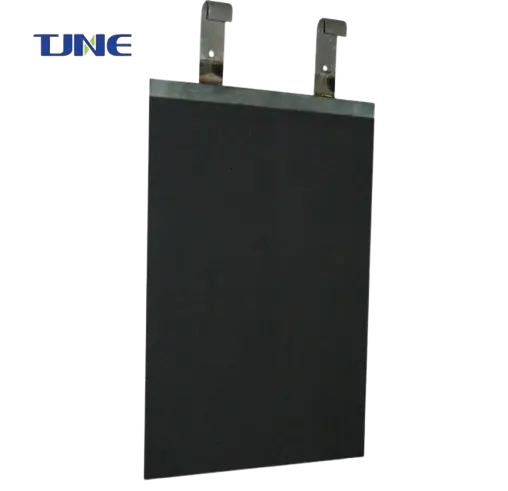
Furthermore, the surface properties of titanium anodes can be tailored to enhance their catalytic activity. This can lead to lower overpotentials during the electrowinning process, meaning less energy is required to achieve the desired copper electrowinning rate. Xi'an Taijin New Energy & Materials Sci-Tech Co., Ltd. has developed proprietary coatings for their titanium anodes that maximize this catalytic effect, further improving energy efficiency.
The combination of these factors – improved conductivity, enhanced durability, and optimized surface properties – results in a more efficient copper electrowinning process. This efficiency translates directly to environmental benefits, including reduced energy consumption, decreased raw material waste, and lower emissions associated with anode production and replacement.
What impact do titanium anrodes have on the quality and purity of copper electrowinning?
The quality and purity of the copper electrowinning are not only important for the performance of the final product but also have significant environmental implications. Higher quality plating typically means longer-lasting products, reducing the need for replacements and the associated environmental impact of manufacturing and disposal.
Titanium electrodes, particularly those produced by Xi'an Taijin New Energy & Materials Sci-Tech Co., Ltd., can contribute to improved copper electrowinning quality in several ways. The uniform current distribution provided by titanium anodes results in more consistent copper electrowinning.
Moreover, titanium anodes are chemically inert in most electrowinning bath compositions. Unlike some traditional anode materials, titanium does not introduce contaminants into the electrolysis solution. This purity helps maintain the integrity of the electrowinning bath over time, reducing the frequency of bath replacements and the associated waste disposal issues.
By contributing to higher quality and purity in copper electrowinning, titanium anodes help create more durable and efficient products. This longevity reduces the frequency of replacement and repair, ultimately leading to less waste and lower environmental impact throughout the product lifecycle.
Can titanium electrodes reduce hazardous waste generation in copper electrowinning processes?
One of the most significant environmental concerns associated with traditional copper electrowinning processes is the generation of hazardous waste. This waste can include spent electrolysis solutions, sludges containing heavy metals, and contaminated rinse waters. The use of titanium anodes has the potential to address some of these issues and contribute to a reduction in hazardous waste generation.
Firstly, the corrosion resistance of titanium anodes means they do not degrade and contaminate the electrowinnig bath over time. Traditional anodes, particularly those made of lead, can slowly dissolve in the electrolysis solution, introducing harmful contaminants. This contamination not only affects the quality of the electrowinning but also increases the toxicity of the spent eletrowinning bath, making it more challenging and expensive to treat and dispose of safely. By eliminating this source of contamination, titanium anodes help extend the life of electrowinning baths and reduce the volume of hazardous waste generated.
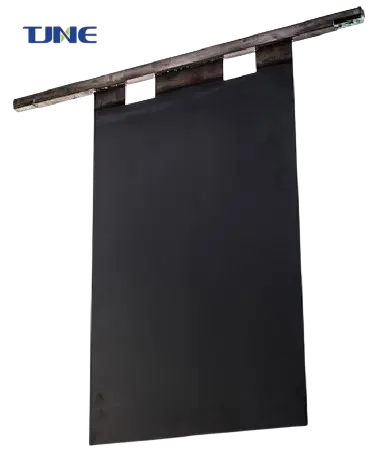
Secondly, the efficiency improvements provided by titanium anodes can lead to a reduction in the overall chemical consumption of the electrowinning process. More efficient electrowinning means less copper is wasted as sludge or in drag-out losses. This reduction in waste not only conserves resources but also minimizes the amount of copper-containing waste that needs to be treated or disposed of.
Xi'an Taijin New Energy & Materials Sci-Tech Co., Ltd. has developed specialized coatings for titanium anodes that can further enhance these benefits. These coatings can promote more efficient copper ion reduction at the cathode, reducing the formation of harmful byproducts such as hydrogen gas. This not only improves the safety of the electrowinning operation but also reduces the need for additional chemical treatments to manage these byproducts.
Furthermore, the use of titanium anodes can enable the adoption of more environmentally friendly electrowinning bath chemistries. Some advanced copper electrowinning formulations require specific electrode properties to function effectively. Titanium anodes, with their customizable surface properties, can be tailored to work optimally with these greener electrolysis solutions, facilitating a broader shift towards more environmentally benign electrowinning processes.
The durability of titanium anodes also means fewer anode replacements, reducing the waste associated with spent anodes. While titanium anodes may have a higher initial cost, their long lifespan and recyclability at the end of their useful life contribute to a reduced overall environmental impact compared to more frequently replaced traditional anodes.

In conclusion, the use of titanium anodes in copper elelctrowinning processes offers several potential environmental benefits. These include improved efficiency, higher quality electrowinning, and reduced hazardous waste generation. As the industry continues to seek more sustainable practices, technologies like those developed by TJNE play a crucial role in advancing environmentally friendly copper electrolysis solutions. By adopting titanium anodes, electrowinning operations can reduce their environmental footprint while potentially improving product quality and process efficiency.
If you are interested in the products of Xi'an Taijin New Energy & Materials Sci-Tech Co., Ltd., please contact yangbo@tjanode.com.
References:
1. Walsh, F. C., & Ponce de León, C. (2014). A review of the electrodeposition of metal matrix composite coatings by inclusion of particles in a metal layer: an established and diversifying technology. Transactions of the IMF, 92(2), 83-98.
2. Schlesinger, M., & Paunovic, M. (Eds.). (2011). Modern electroplating (Vol. 55). John Wiley & Sons.
3. Santana, R. A. C., Campos, A. R. N., Medeiros, E. A., Oliveira, A. L. M., Silva, L. M. F., & Prasad, S. (2007). Studies on electrodeposition and corrosion behavior of a Ni–W–Co amorphous alloy. Journal of Materials Science, 42(22), 9137-9144.
4. Tsai, W. C., Wan, C. C., & Wang, Y. Y. (2002). Mechanism of copper electrodeposition by pulse current and its relation to current efficiency. Journal of Applied Electrochemistry, 32(12), 1371-1378.
5. Low, C. T. J., Wills, R. G. A., & Walsh, F. C. (2006). Electrodeposition of composite coatings containing nanoparticles in a metal deposit. Surface and Coatings Technology, 201(1-2), 371-383.
6. Dini, J. W., & Snyder, D. D. (2010). Electrodeposition of copper. In Modern Electroplating (pp. 33-78). John Wiley & Sons, Inc.
7. Gu, C., Lian, J., Li, G., Niu, L., & Jiang, Z. (2005). Electroless Ni–P plating on AZ91D magnesium alloy from a sulfate solution. Journal of Alloys and Compounds, 391(1-2), 104-109.
8. Chandrasekar, M. S., & Pushpavanam, M. (2008). Pulse and pulse reverse plating—Conceptual, advantages and applications. Electrochimica Acta, 53(8), 3313-3322.
9. Cui, G., Bi, Q., Niu, S., Yang, J., & Wang, L. (2015). The effect of grain size on the mechanical properties of nanocrystalline NiCo alloys. Materials Science and Engineering: A, 631, 185-191.
10. Youssef, K. M. S., Koch, C. C., & Fedkiw, P. S. (2004). Improved corrosion behavior of nanocrystalline zinc produced by pulse-current electrodeposition. Corrosion Science, 46(1), 51-64.

Related Industry Knowledge
- How Does Titanium Enhance Copper Electrodeposition Adhesion?
- What Are the Benefits of Using Titanium Electrodes for Copper Electrodeposition?
- How Do Titanium Electrodes Enhance Copper Electrodeposition Efficiency and Quality?
- How to Prepare a Titanium Electrode for Copper Electrodeposition?
- What is the Process Involved in Electrodepositing Copper Using a Titanium Electrode?
- Can Copper Be Used as an Electrode?
- Can Titanium Electrodes Improve the Adhesion of Copper Electrodeposition?
- Why Should You Consider Titanium Electrodes for Copper Plating?
- What Makes PCB RPP Copper Plating Essential for Durable Surface Area Enhancement?
- How Does PCB VCP DC Copper Plating Work in Direct Current Systems?