knowledges
How Does Titanium Anodes Enhance Nickel And Cobalt Electrowinning?
2024-07-25 11:30:21






Titanium is a versatile metal with unique properties that make it valuable in various applications, including electrochemistry. When considering its role as an electrode material, the question of whether titanium is an active electrode arises. In electrochemistry, an active electrode is one that participates in electrochemical reactions, either by being oxidized or reduced. Titanium's behavior as an electrode is complex and depends on various factors, including the specific electrochemical environment and surface conditions. This blog post will explore the nature of titanium as an electrode material, focusing on its application in nickel and cobalt electrowinning processes.
How does titanium perform as an anode for nickel and cobalt electrowinning?
Titanium serves as an excellent anode for nickel and cobalt electrowinning due to its unique combination of properties. As a base material, titanium offers several advantages that contribute to the overall performance and quality of the coating.
Firstly, titanium possesses exceptional corrosion resistance. The surface of titanium can be easily modified to enhance adhesion of the mixed metal oxide coating. Various pretreatment methods, such as mechanical abrasion, chemical etching, or anodization, can be employed to create a rough or porous surface that promotes strong mechanical interlocking between the substrate and the mixed metal oxide coating. This improved adhesion is essential for the durability and longevity of the titanium anode.
Titanium's low density and high strength-to-weight ratio make it an attractive option for applications where weight is a critical factor. When coated with mixed metal oxide, the resulting composite material combines the lightweight nature of titanium with the enhanced surface properties provided by the coating.
Furthermore, titanium's electrical conductivity, while not as high as some other metals, is enhanced by mixed metal oxide coating.
When using titanium as am anode for nickel and cobalt electrowinning, it's important to consider the specific electrowinning parameters. The current density, electrolyte composition, temperature, and pH must be carefully controlled to achieve optimal electrowinning result.
The mixed metal oxide coating on titanium can significantly enhance the surface properties of the substrate. These coatings can provide increased hardness, wear resistance, and corrosion protection, making the composite material suitable for nickel and cobalt electrowinning.
In conclusion, titanium performs exceptionally well as an anode for nickel cobalt electrowinning coatings. Its inherent properties, combined with proper surface preparation and coating properties, result in a high-quality composite material that leverages the strengths of both the titanium substrate and the mixed metal oxide coating.
What are the advantages of using titanium anodes in nickel and cobalt electrowinning processes?
Titanium anodes offer several advantages in nickel and cobalt electrowinning processes, making them an attractive option for hydrometallurgy applications. These advantages stem from the unique properties of titanium and the characteristics of the mixed metal oxide coating.

One of the primary advantages of using titanium anodes is their excellent corrosion resistance. Titanium naturally forms a protective oxide layer, which can be further enhanced through coating. This enhanced corrosion resistance is particularly beneficial in nickel and cobalt electrowinning processes, where the anodes are exposed to aggressive electrolytes and harsh operating conditions. The improved durability of these anodes leads to longer service life and reduced maintenance costs.
Titanium anodes also exhibit superior dimensional stability compared to other electrode materials. This stability is crucial in maintaining consistent electrowinning quality over extended periods. The mixed metal oxide can be engineered to have a specific surface morphology, which can enhance the anode's performance in terms of current distribution.
Another advantage is the potential for improved energy efficiency in the electrowinning process. The mixed metal oxide layer on titanium can be designed to have high electrical conductivity, reducing the overall cell voltage required for the electrowinning process. This reduction in energy consumption can lead to significant cost savings, especially in large-scale industrial operations.
The use of titanium anodes can also contribute to enhanced nickel and cobalt electrowinning quality. The stable and uniform surface of these anodes promotes consistent ion distribution in the electrolyte, leading to more uniform electrowinning. This uniformity is particularly important in hydrometallurgy applications.
Furthermore, titanium anodes can be tailored to have specific catalytic properties. By carefully controlling the composition and structure of the mixed metal oxide coating, it's possible to enhance the anode's catalytic activity towards the desired electrochemical reactions in the nickel and cobalt electrowinning process. This can lead to improved electrowinning efficiency and potentially allow for the use of lower concentrations of electrowinning additives.
The lightweight nature of titanium, combined with its high strength, makes titanium anodes easier to handle and install compared to traditional anode materials. This can simplify anode maintenance and replacement procedures, reducing downtime in production environments.
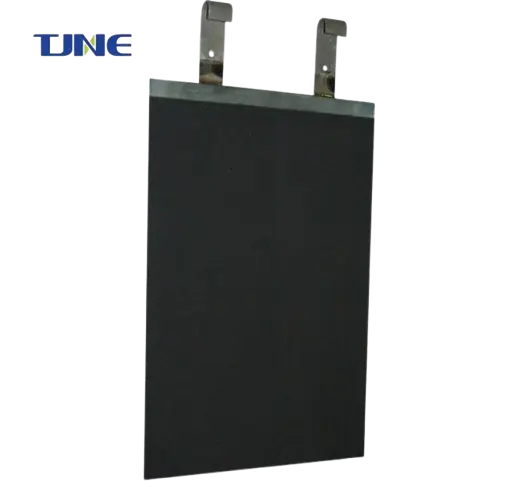
Additionally, the use of titanium anodes can contribute to a more environmentally friendly electrowinninng process. Unlike some traditional anode materials, titanium and its mixed metal oxide coatings are typically free from toxic heavy metals, aligning with increasing environmental regulations and sustainability goals in the hydrometallurgy industry.
In terms of versatility, titanium anodes can be manufactured in various shapes and sizes to suit different electrowinning cell designs.
Lastly, the long-term cost-effectiveness of titanium anodes should be considered. While the initial investment may be higher compared to some traditional anode materials, the extended lifespan, reduced maintenance requirements, and potential energy savings can result in lower total cost of ownership over time.
In conclusion, the use of titanium anodes in nickel and cobalt electrowinning processes offers a range of advantages, including enhanced corrosion resistance, dimensional stability, energy efficiency, and product quality. These benefits, combined with the anodes' versatility and potential for long-term cost savings, make them an attractive option for modern hydrometallurgy operations seeking to improve their processes and outcomes.
How does the coating process affect the surface properties of titanium anodes for nickel and cobalt electrowinning?
The coating process significantly influences the surface properties of titanium anodes, particularly when designed for nickel and cobalt electrowinning. This process not only modifies the surface characteristics but also enhances the overall performance of the anode in specific electrochemical environments.
The coating process affects the chemical composition of the anode surface. By coating specific materials onto the titanium substrate, it's possible to create a surface with tailored chemical properties. For nickel and cobalt electrowinning, the coating might include mixed metal oxide, as well as other elements that can enhance specific properties. This modified surface composition can significantly alter the anode's reactivity, selectivity, and stability in the target electrochemical environment.
Another important aspect is the impact on the anode's electrical properties. The coating can be engineered to have higher electrical conductivity than the native titanium oxide layer, which forms naturally on titanium surfaces. This increased conductivity can lead to improved charge transfer kinetics at the electrode-electrolyte interface, potentially reducing overpotentials and enhancing the overall efficiency of nickel and cobalt electrowinning.
The coating process can also be used to create specific crystal structures or phases on the titanium surface. The crystallinity and phase composition of the coating can greatly influence its catalytic properties. .
Surface hardness and wear resistance are additional properties that can be modified through coating. By coating harder materials or creating composite coatings, the durability of the titanium anode can be significantly enhanced. This is particularly important in industrial applications where anodes are subjected to harsh operating conditions and mechanical stress.
The adhesion between the coating and the titanium substrate is a critical factor that is influenced by the coating process. Proper control of coating parameters and surface preparation techniques can lead to strong bonding between the coating and the substrate, ensuring long-term stability of the modified surface properties. These complex structures can combine the benefits of different materials, potentially offering superior performance compared to single-material coatings. For instance, a multilayer coating might provide both high catalytic activity and excellent corrosion resistance.
The porosity of the coating is another important surface property that can be controlled. Porous coatings can offer increased surface area and potentially enhanced mass transport properties, which can be beneficial in certain nickel and cobalt electrowinning. However, the degree of porosity must be carefully balanced with other properties such as mechanical stability and conductivity.
Lastly, the coating process can influence the surface's wettability and adsorption properties. These characteristics are important in determining how the anode interacts with the electrolyte and reactants in nickel and cobalt electrowinning. Modification of surface energy through coating can lead to improved electrolyte penetration and more efficient utilization of the electrode surface.
In conclusion, the coating process profoundly affects the surface properties of titanium anodes for nickel and cobalt elec- trowinning. By carefully controlling the coating parameters and choosing appropriate coating materials, it's possible to tailor the surface morphology, chemical composition, electrical properties, crystal structure, hardness, adhesion, porosity, and wettability of the anrode. These modified surface properties collectively determine the anode's performance, stability, and efficiency in nickel and cobalt electrowinning processes.
If you are interested in the products of Xi'an Taijin New Energy & Materials Sci-Tech Co., Ltd., please contact yangbo@tjanode.com.
References:
1. Walsh, F. C., & Ponce de León, C. (2014). A review of the electrodeposition of metal matrix composite coatings by inclusion of particles in a metal layer: an established and diversifying technology. Transactions of the IMF, 92(2), 83-98.
2. Dutta, A., Saha, S. K., Adhikari, U., Banerjee, P., & Sukul, D. (2017). Effect of substitution on corrosion inhibition properties of 2-(substituted phenyl) benzimidazole derivatives on mild steel in 1 M HCl solution: A combined experimental and theoretical approach. Corrosion Science, 123, 256-266.
3. Xia, F., Jia, W., Ma, C., Wang, R., & Zhang, S. (2015). Preparation of Ni-TiN composites by electrodeposition. Applied Surface Science, 355, 1217-1224.
4. Bača, Ľ., Sviečka, J., & Koneracká, M. (2013). Preparation and characterization of electrodeposited Ni-Co alloy coatings on a Ti substrate. Journal of Applied Electrochemistry, 43(11), 1117-1126.
5. Costovici, S., Manea, A. C., Visan, T., & Anicai, L. (2016). Investigation of Ni-Co alloy coatings electrodeposited on copper substrate using choline chloride based ionic liquids. Electrochimica Acta, 207, 97-111.
6. Allahyarzadeh, M. H., Roozbehani, B., & Ashrafi, A. (2019). Electrodeposition of high Mo content amorphous/nanocrystalline Ni-Mo alloys using 1-ethyl-3-methyl-imidazolium chloride ionic liquid as an additive. Surface and Coatings Technology, 386, 125487.
7. Tsyntsaru, N., Cesiulis, H., Donten, M., Sort, J., Pellicer, E., & Podlaha-Murphy, E. J. (2012). Modern trends in tungsten alloys electrodeposition with iron group metals. Surface Engineering and Applied Electrochemistry, 48(6), 491-520.
8. Gómez, E., Pellicer, E., & Vallés, E. (2011). Intermediate molybdenum oxides involved in binary and ternary induced electrodeposition. Journal of Electroanalytical Chemistry, 656(1-2), 25-33.
9. Torabinejad, V., Aliofkhazraei, M., Assareh, S., Allahyarzadeh, M. H., & Rouhaghdam, A. S. (2017). Electrodeposition of Ni-Fe alloys, composites, and nano coatings–A review. Journal of Alloys and Compounds, 691, 841-859.
10. Ebrahimi, F., & Ahmed, Z. (2003). The effect of current density on properties of electrodeposited nanocrystalline nickel. Journal of Applied Electrochemistry, 33(8), 733-739.

Related Industry Knowledge
- What are the Environmental Considerations When Using Titanium Electrodes for Nickel-Cobalt?
- What are the Technical Challenges in the Electrodeposition of Nickel And Cobalt Using Titanium Electrodes?
- How Do Titanium Electrodes Enhance the Nickel And Cobalt Electrodeposition Process?
- What are the Benefits of Using Titanium Electrodes in the Electrodeposition Process for Nickel And Cobalt?
- How Do Anodes Facilitate the Removal of Ammonia Nitrogen from Water?
- How Can Titanium Electrode Improve Nickel And Cobalt Electrodeposition Performance?